Affiliate Disclosure
Some links on this page are affiliate links. As an Amazon Associate, we earn from qualifying purchases — at no extra cost to you. We do not buy, test, or physically handle the products we cover; our rankings come from aggregated owner reviews, ratings and expert consensus. Commissions never change our verdicts. How we rank & full disclosure.
Short version: using a battery maintainer is genuinely a hook-it-up-and-forget-it job. Connect red to positive, black to negative or a metal ground, plug it into the wall, and a modern automatic maintainer does the rest — charging the battery to full and then floating it safely for as long as you leave it connected. It's the easiest way to guarantee a stored car, motorcycle, boat or classic starts on the first try after weeks or months of sitting. Here's the simple routine and the few things worth getting right.
First, a quick check that a maintainer is even the tool you want. If your battery is already flat, a maintainer won't revive it well — you want a battery charger for that. A maintainer is for keeping a healthy battery from going flat while the vehicle sits. If that's your situation, read on. If you haven't bought one yet, the ranked options are in best battery maintainer.
Step by Step: Connecting a Maintainer
- Park and switch off. Make sure the vehicle is off. You can leave the battery installed — no need to remove it.
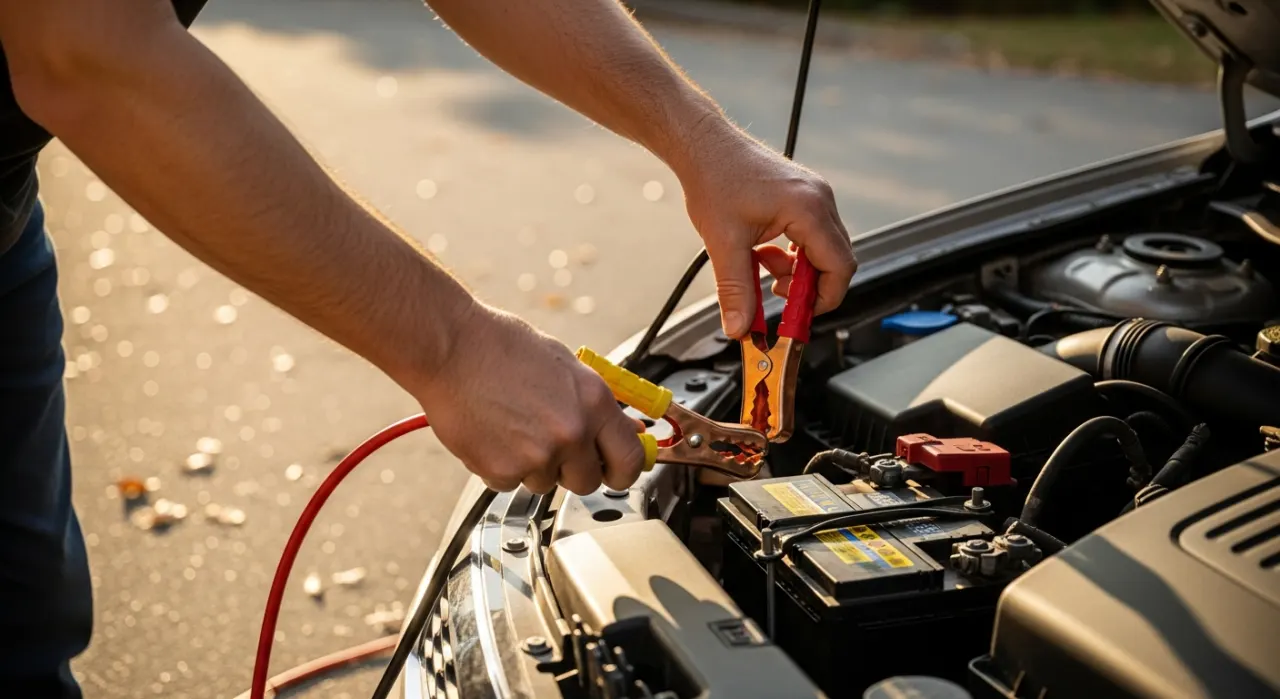
- Connect positive first. Attach the red clamp or ring terminal to the battery's positive (+) terminal.
- Connect negative or ground. Attach the black clamp to the negative (-) terminal or a bare metal ground on the chassis.
- Plug it in. Now connect the maintainer to the wall outlet. Doing it in this order keeps any spark away from the battery.
- Check the indicator. Most maintainers show a light — charging (often red/amber) shifting to full/float (often green). That's your confirmation it's working.
- Leave it. That's it. An automatic maintainer will top up and float indefinitely.
To disconnect, reverse the order: unplug from the wall first, then remove the black clamp, then the red.
Use the Quick-Connect Harness
Nearly every good maintainer includes a ring-terminal harness — two rings on a short pigtail with a weatherproof connector. Bolt the rings to your battery terminals once, tuck the connector somewhere easy to reach, and from then on you simply clip the maintainer on and off without opening the hood or fishing around the terminals. For a motorcycle, boat or a car you maintain regularly, this five-minute setup makes the whole thing effortless and is exactly how experienced owners run it. Route the pigtail so it isn't pinched when the hood, seat or panel closes.
Can You Leave It On All Winter?
Yes — this is the maintainer's whole reason to exist. A modern automatic maintainer charges to full and then switches to a float mode, feeding only the trickle the battery loses to natural self-discharge. It monitors continuously and won't overcharge, so leaving it connected for an entire winter layup is the intended use, not a risk. The important word is automatic: an old manual trickle charger without float control pushes constant current and can overcharge if left too long. If you're using one of the smart maintainers we rank, leave it on and don't think about it until spring.
Safety and Good Practice
- Ventilation. Charge in a ventilated space — a battery can vent small amounts of gas.
- Clean connections. Corroded terminals hurt the connection; wipe them clean for reliable contact.
- Right chemistry. If you run a lithium (LiFePO4) battery, use a maintainer rated for lithium — a lead-acid-only unit can damage it.
- Weatherproofing. If the harness connector sits exposed, use the rubber cap so moisture stays out.
- Check occasionally. Even set-and-forget gear deserves a glance now and then to confirm the light still shows float.
A Maintainer Is Not a Charger
Worth repeating because it trips people up: a maintainer delivers a small current to keep a charged battery full, not to revive a dead one. Some smart maintainers won't even engage on a deeply discharged battery. If yours is flat, bring it back to full with a proper battery charger first, then hand it over to the maintainer for storage. And if the battery keeps draining even though the car gets driven, that points to a parasitic drain or a failing battery — confirm which with one of the best battery testers before you assume the maintainer will fix it.
The Bottom Line
A battery maintainer is about as simple as car care gets: connect positive, then negative, then plug in; reverse to remove. Use the ring harness to make it a one-clip job, leave an automatic unit connected as long as the vehicle sits, and your stored car, bike or classic will start every time. For the maintainers owners rate highest and the rest of the battery-care kit, head back to the jump starters & battery care hub.