Affiliate Disclosure
Some links on this page are affiliate links. As an Amazon Associate, we earn from qualifying purchases — at no extra cost to you. We do not buy, test, or physically handle the products we cover; our rankings come from aggregated owner reviews, ratings and expert consensus. Commissions never change our verdicts. How we rank & full disclosure.
Short version: a coaxial speaker packs the woofer and tweeter into one drop-in unit — cheap, simple, and a huge upgrade over factory. A component set separates the tweeter into its own housing so you can mount it higher, near ear level, which lifts the soundstage and sharpens the detail. Components sound better to a careful listener, but they cost more and take longer to install. For most people, a good coaxial is the smart buy; audiophiles and detail-lovers go component. Neither is wrong — it comes down to how much you care about the last slice of sound quality and how much install effort you’re up for. Here’s the honest breakdown.
This is the first decision to settle before you shop, because it shapes everything else. Once you’ve picked a side, our best car speakers ranking covers strong options in both types, and how to upgrade car speakers walks through the install.
What a coaxial speaker is
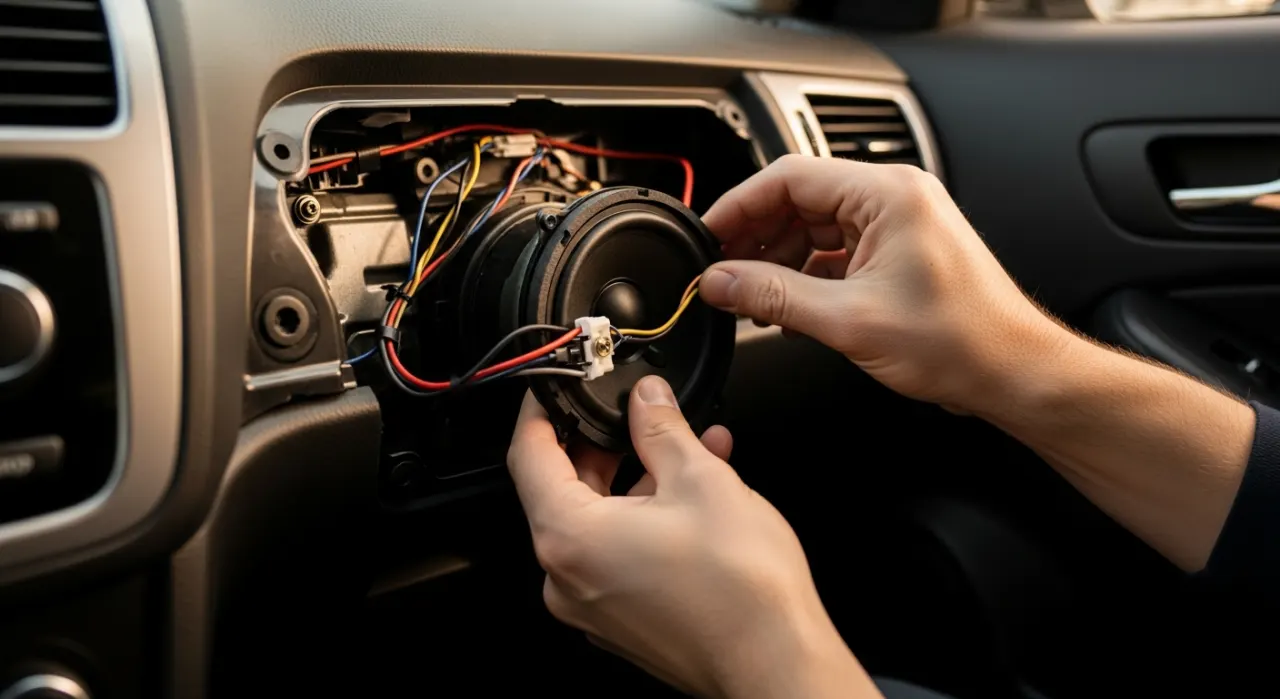
A coaxial — also called a "full-range" speaker — does everything in one unit. The large cone (the woofer) handles the low and mid frequencies, and a small tweeter sits on a post in the middle to handle the highs. Because it’s a single piece, it bolts straight into your car’s factory speaker location with no extra mounting. That simplicity is its biggest strength: a coaxial is a true drop-in that turns a tinny stock system into something genuinely good in about the time it takes to remove and refit a door panel. It’s the default choice for the vast majority of upgrades, and it’s why coaxials outsell components by a wide margin.
What a component set is
A component set takes the same job and splits it across separate, specialized pieces: a dedicated woofer, a separate tweeter, and an external crossover that decides which frequencies go to each driver. The woofer mounts in the door like a coaxial, but the tweeter gets its own home — ideally up high, near ear level, in a factory tweeter spot, the sail panel or the A-pillar. That freedom to place the tweeter is the entire reason components exist, and it’s what gives them their edge in sound.
The sound difference, honestly
Here’s the truth without the hype. Components generally sound better for two reasons. First, tweeter placement: mounting the tweeter high, near your ears, raises the soundstage so vocals and instruments seem to come from the dash or windshield rather than down by your knees — it sounds more like a live performance in front of you. Second, the dedicated crossover divides frequencies more cleanly than the simple crossover built into a coaxial, so each driver does only its job. The result is sharper imaging and better detail. But be honest with yourself about the size of the gap: it’s real, but it’s the last 15% of quality, and a good coaxial already sounds excellent. Whether you’ll notice depends entirely on how closely you listen.
Cost and install effort
Components cost more — you’re buying separate drivers and crossovers — and they ask more of you at install time. On top of the normal speaker swap, you have to mount the tweeters somewhere suitable, run wire to them, and find a home for the crossovers. None of it is hard for a patient DIYer, but it’s an afternoon rather than an hour, and if your car has no factory tweeter location, you may be mounting them in the sail panel or A-pillar. A coaxial sidesteps all of that: it’s a bolt-in, wire-in, done job. If simplicity and budget matter most, that’s a real point in the coaxial’s favor.
Which one is right for you
Buy a coaxial if: you want the biggest easy upgrade over factory, you value a simple drop-in install, you’re watching the budget, or you’re a casual listener who mainly wants clearer, fuller sound without fuss. This describes most people, and there’s no shame in it — a quality coaxial is a genuinely great speaker.
Buy a component set if: you listen carefully and care about imaging and a realistic, elevated soundstage, you’re building a proper system (often with an amp), and you don’t mind the extra install steps to get the tweeters mounted right. If the details of how music is reproduced matter to you, components reward the effort.
The verdict
For most drivers, a good coaxial is the smart buy — most of the benefit, less money, and an easy install. If you’re a keen listener chasing the best soundstage and you’re happy to mount tweeters and run a little extra wire, a component set is worth the step up. Either way you’re making the single biggest improvement available to your car’s sound. When you’re ready to choose a specific set, head to best car speakers, and if you think you might add an amp to get the most from components, read do you need an amp? first. The full car audio hub ties the whole upgrade together.