Affiliate Disclosure
Some links on this page are affiliate links. As an Amazon Associate, we earn from qualifying purchases — at no extra cost to you. We do not buy, test, or physically handle the products we cover; our rankings come from aggregated owner reviews, ratings and expert consensus. Commissions never change our verdicts. How we rank & full disclosure.
Short version: you don’t need an amp to enjoy a set of new speakers — a modern head unit drives them fine and they’ll sound far better than factory straight away. Where an amp becomes essential is when you add a subwoofer (which needs dedicated power to do anything at all) or fit power-hungry component speakers that outrun your stereo. The honest rule is simple: buy an amp when you have something that genuinely needs the power, not before. Adding one too early is money that buys little; adding one at the right time transforms the system. Here’s exactly when it’s worth it — and when it isn’t.
This is one of the most misunderstood parts of car audio, and getting it right saves you both money and disappointment. If you’re still choosing speakers, start with best car speakers; if a sub is on your list, see best car subwoofer.
What an amp actually does
An amplifier takes the weak audio signal from your head unit and boosts it into a much stronger one that can drive speakers and subs hard. The key word is cleanly. When you push a head unit to its volume limit, the signal starts to clip — a harsh, distorted sound that not only sounds bad but can actually damage speakers, especially tweeters. A properly sized amp gives the system headroom: strong, clean power in reserve so the sound stays crisp and controlled when you turn it up. And for a subwoofer, an amp is the only thing that can supply enough power to move the air that produces deep bass. So an amp isn’t really about "more volume" — it’s about clean volume and the ability to drive demanding gear.
When you don’t need one (speakers)
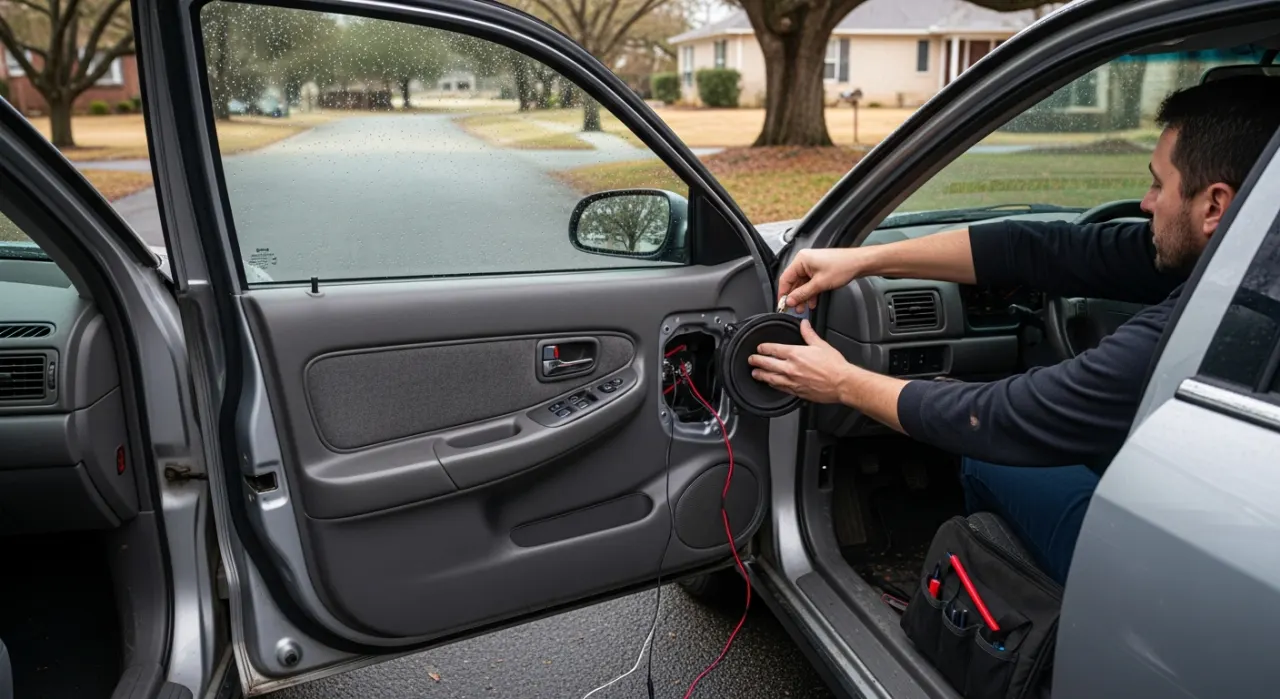
If you’re upgrading your door speakers to a decent set of coaxials or entry-level components, you can absolutely run them off your head unit and be very happy. Modern stereos put out enough power for these speakers to sound dramatically better than the factory ones, and the improvement is immediate. For a commuter who listens at normal volumes and just wants clearer, fuller sound, an amp at this stage is money that buys very little. Upgrade the speakers, enjoy them, and revisit the amp question only if you later feel the system runs out of steam. There’s no rule that says a speaker upgrade must include an amp — for most people it shouldn’t, at least not at first.
When you absolutely need one (subwoofers)
Here’s the non-negotiable case: a subwoofer requires an amp. A raw sub connected to nothing produces no bass at all — it needs a dedicated amplifier to supply the substantial power it takes to move its heavy cone and shift enough air for deep bass. There’s no way around it. The one shortcut is an all-in-one powered enclosure, which builds the amp right into the sub box; you just run power, ground and a signal wire and you’re done. So if you want bass, you’re either buying a raw sub and a matching mono amp, or buying a powered box that includes the amp. We cover both routes in best car subwoofer.
When it’s worth it (high-end components)
The middle case is high-end component speakers. Serious component sets are often less efficient and more power-hungry than budget coaxials, and they’re designed to reveal their full potential only when given ample clean power. Run them off a head unit and they’ll sound fine; add a quality 4-channel amp and they open up — more dynamic, more detailed, and able to play loud without strain. So if you’ve invested in a good component set and feel like you’re not hearing everything they can do, that’s the honest signal an amp is worth it. For budget speakers, the return is much smaller.
Matching the amp: channels and power
If you decide you need one, match it to the job. Channels tell you what it can drive: a mono amp is for a subwoofer; a 2-channel powers a pair of speakers; a 4-channel powers four speakers, or two speakers plus a bridged sub; a 5-channel does four speakers and a sub in one unit. Power matters too — match the amp’s RMS output to your speakers’ or sub’s RMS rating. Under-powering leaves the system weak and can cause clipping; wildly over-powering risks damage. Aim to be in the same ballpark as the speaker’s RMS rating, and you’ll get clean, controlled sound. Don’t forget an amp wiring kit (power cable, ground, fuse and signal leads) — it’s required for the install.
The verdict
Buy an amp when you have something that genuinely needs it: always for a raw subwoofer, often for high-end power-hungry components, and rarely at first for a normal speaker upgrade off the head unit. Adding one at the right moment transforms the system with clean, effortless power; adding one too early spends money for little gain. If your next step is bass, head to best car subwoofer and pair it with a matching amp (or a powered box). If you’re still on the speaker decision, component vs coaxial and best car speakers will point you right. The full car audio hub shows how the amp fits the whole system.