"Lasts 9 years." "Lifetime protection." "Coat it once and forget it." The ceramic coating aisle is a wall of big numbers, and almost none of them survive contact with a real car that lives on a real street. So let's answer the question straight: how long does ceramic coating actually last?
The honest answer is a range, not a headline number — and where your car lands in that range depends far more on prep and maintenance than on the bottle you bought. Here's the real-world breakdown.
Part of the ceramic coating hub. If you're still deciding what to buy, see the best DIY ceramic kits we tested.
Real-World Lifespan by Coating Type
Forget the box for a second. Here's what each tier of product realistically delivers on a daily-driven car that gets washed regularly but isn't babied in a climate-controlled garage.
| Coating type | Marketing claim | Real-world lifespan | Best for |
|---|---|---|---|
| SiO2 spray coating | "6–12 months" | 3–6 months | Beginners, maintenance toppers, quick protection |
| Consumer DIY bottle kit | "2–5 years" / "9H" | 1–2 years | Enthusiasts willing to prep and apply carefully |
| Professional-grade coating | "5–9 years" / "lifetime" | 2–5 years | New cars, show cars, long-term keepers |
| Graphene coating | "7+ years" | 2–4 years | Hot climates, high water-spot resistance |
Notice the gap between column two and column three. That gap isn't the manufacturer lying, exactly — it's the difference between a coating cured in a lab on a test panel and one applied by a person in a driveway over paint that may not have been perfectly prepped. The number on the box is the ceiling. Your prep and maintenance decide how close you get to it.
Why Your Coating Won't Hit the Number on the Box
Three things quietly steal years off a ceramic coating, and all three are within your control.
Prep is the big one. A ceramic coating bonds to your clear coat at a molecular level — but only if that clear coat is clean, decontaminated and defect-free. Coat over embedded contamination, wax residue or swirl marks and the coating bonds to that instead of the paint, then flakes away with it. This is why a rushed DIY job can fail in months while the same product, properly prepped, lasts two years. Our paint prep and correction guide covers the decontamination and IPA wipe that make or break longevity.
Application technique matters more than product tier. High spots, missed sections and coating that flashed too long before levelling all create weak points where protection fails early. A carefully applied mid-tier kit routinely outlasts a sloppily applied premium one.
Maintenance is the difference between the low and high end of every range above. A coating is a sacrificial protective layer, not an invincible shield. How you wash it from week two onward decides whether you're at the bottom or the top of its lifespan band.
What Actively Wears a Coating Out
Ceramic coatings degrade from the outside in. The usual suspects:
- Automatic brush car washes — the single fastest way to abrade a coating. Harsh spinning brushes and strongly alkaline detergents strip hydrophobicity in a handful of visits.
- Bird droppings and bug guts — acidic and left to bake in the sun, they etch through the coating and into the clear coat. Remove them the same day, every time.
- Hard water and sprinklers — mineral-heavy water dries into bonded spots that dull the surface and give contamination a foothold.
- Road salt and winter grime — abrasive and corrosive; heavy exposure shortens coating life noticeably.
- Constant direct UV — a car that lives outside in full sun ages its coating faster than a garaged twin.
How to Tell Your Coating Is Wearing Off
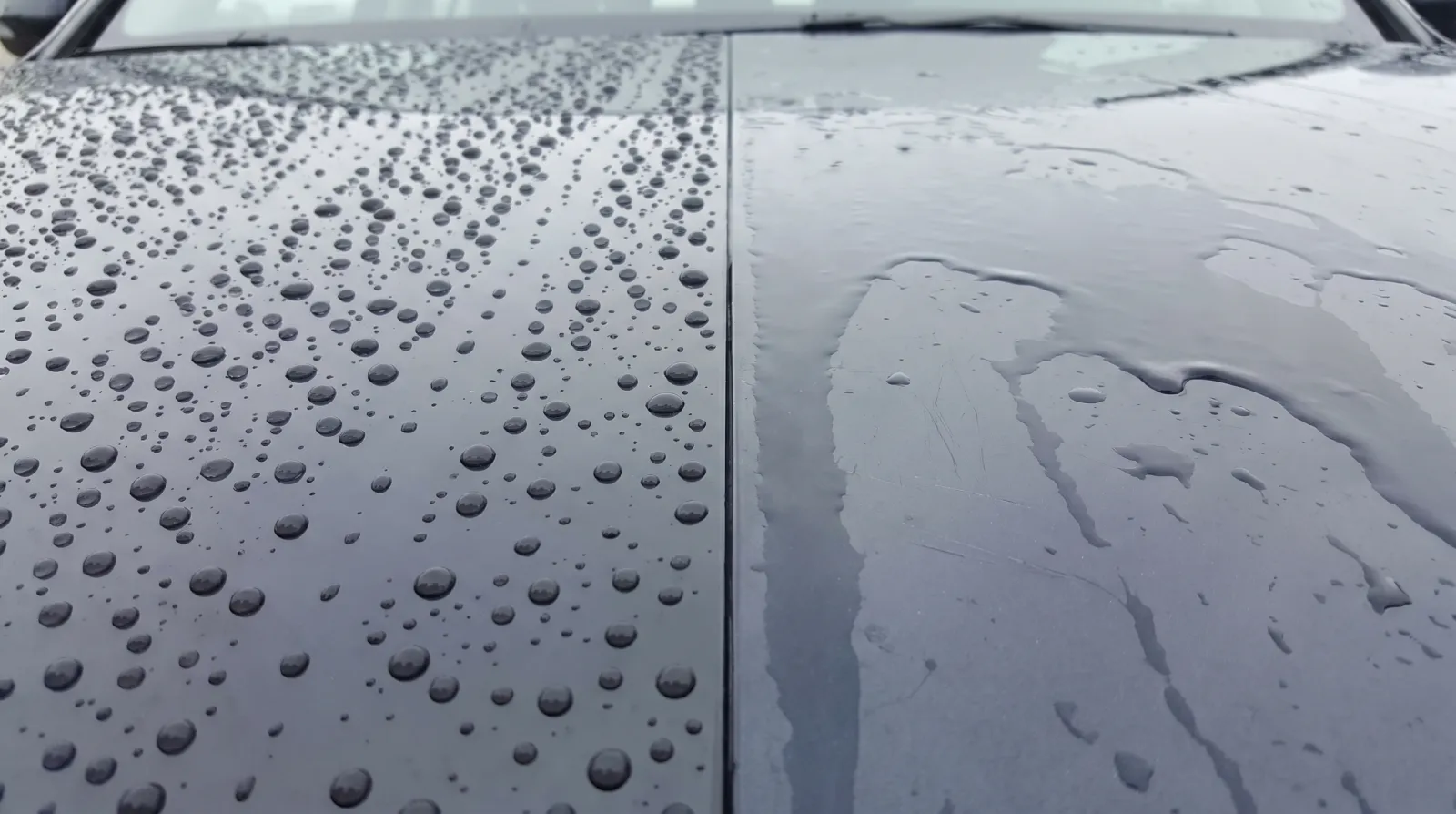
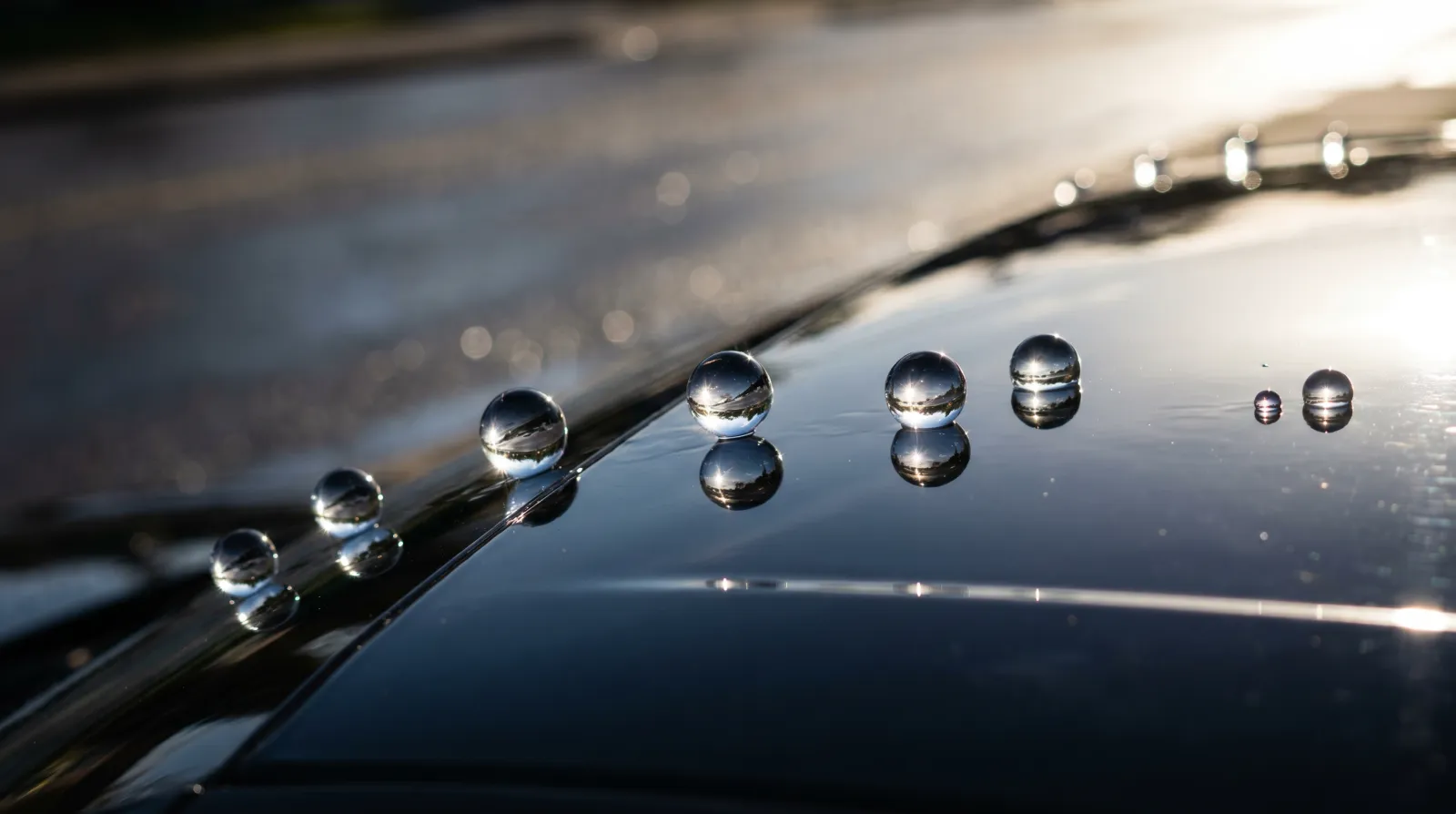
You don't need a meter — you need to watch the water. A healthy coating makes water bead tightly and sheet off the panel when the car moves. As the coating wears, that behaviour changes in a predictable order:
- Beads get bigger and flatter — the contact angle drops, so droplets spread instead of balling up.
- Water starts to cling — instead of sheeting off, it sits in patches and dries on the panel.
- The surface loses its slick feel — run a clean finger across it; a fading coating feels draggy rather than glassy.
- The car stops staying clean — dust and grime hold on between washes the way they did on bare paint.
When you see stage one or two, it's time for an SiO2 spray booster. Wait until stage four and you're usually looking at a full strip and reapply.
How to Make Ceramic Coating Last Longer
Everything below is free or cheap, and collectively it can add a year or more to a coating's real-world life:
- Wash every 1–2 weeks with a dedicated pH-neutral shampoo using the two-bucket method — dirt left on the surface abrades the coating.
- Dry properly with a clean microfiber drying towel so minerals don't dry into water spots.
- Never use an automatic brush wash. Touchless if you must; hand wash if you can.
- Deal with contamination immediately — bird droppings and bug splatter come off the same day.
- Top up with an SiO2 booster every 2–4 months to refresh hydrophobicity and extend the base coating — the routine is in our maintenance and toppers guide.
The Bottom Line
A ceramic coating lasts as long as your prep and maintenance let it. Spray coatings buy you a few months, a well-applied DIY kit gets you one to two years, and a professional coating on properly corrected paint can hold two to five. The headline numbers on the box are a best case you'll only approach by decontaminating before you coat and washing it right forever after. Do that, and even a mid-tier coating earns its keep. Skip it, and no bottle on the shelf will save you.
Ready to choose one? Start with our tested DIY kit picks, or see how coatings stack up against the alternatives in ceramic vs wax.
Affiliate Disclosure
Some links on this page are affiliate links. If you buy through them we may earn a small commission at no extra cost to you. It never changes our verdicts — we only recommend gear we would run on our own cars. Read the full disclosure.