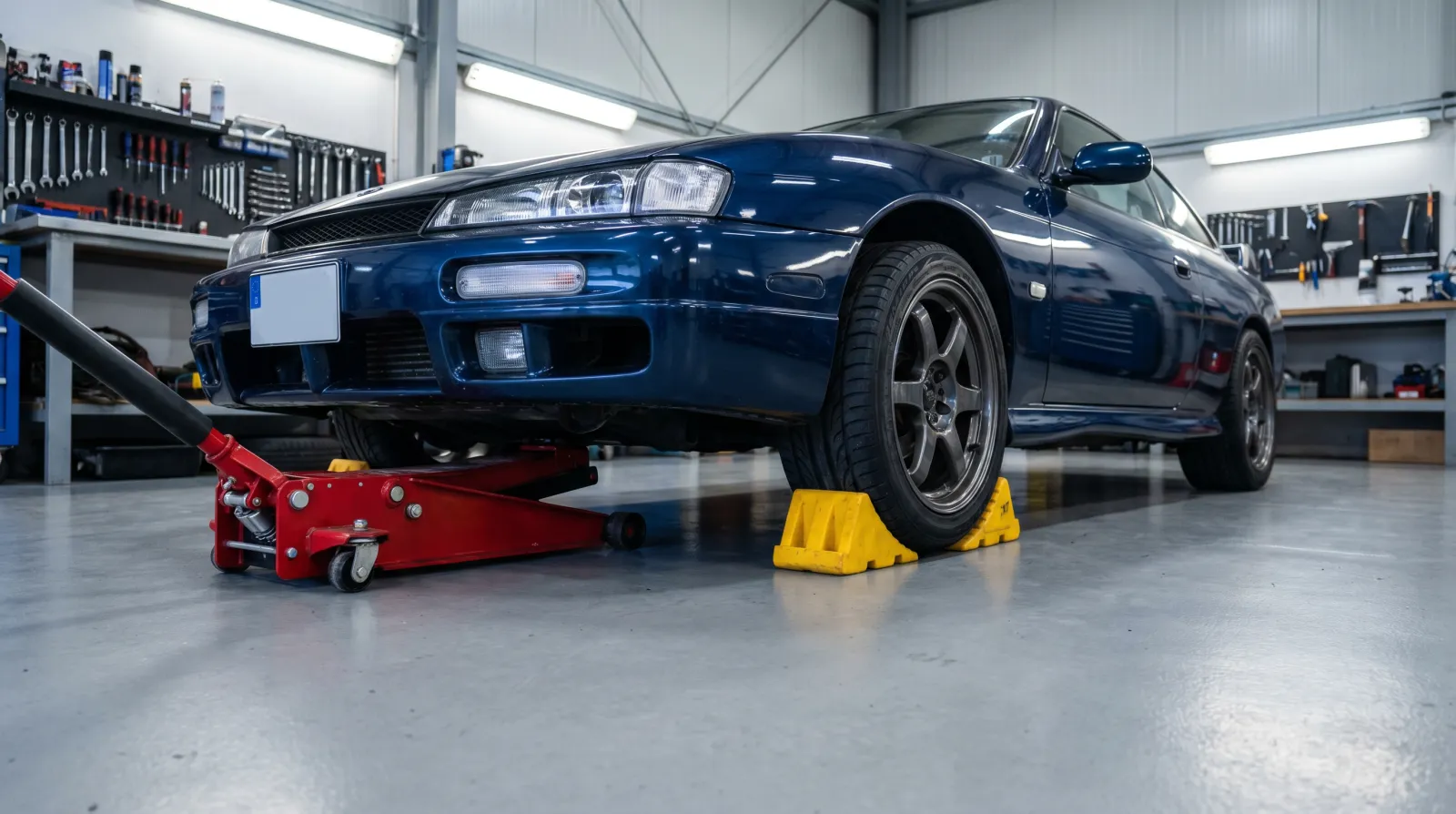
Jacking up a car safely opens the door to oil changes, brakes, suspension and tyre work on your own terms. Do it wrong and you're looking at a crushed car or something far worse. This guide covers the complete process — choosing the spot, finding your jack points, lifting, placing stands, and lowering safely. One rule sits above all others: a jack lifts a car, a jack stand holds it. Never go under a car supported only by a jack. And before you touch anything, find the factory jack points for your specific car in your owner's manual — this guide is the framework; your manual gives the exact locations. It's part of our jacking up a car hub.
What You'll Need
A hydraulic floor (trolley) jack rated above your car's weight; two or four jack stands rated to match; at least two wheel chocks; your owner's manual; a flat, solid, level surface (concrete is ideal); and gloves. Not sure whether to use stands or ramps for your job? See jack stands vs ramps.
Before You Lift: Setting Up Safely
The prep stage is where most mistakes happen. Choose level, solid ground — concrete or a sealed floor; dirt, grass and gravel shift under load, and asphalt softens in heat. Never jack on a slope. Apply the parking brake, and leave a manual in gear or an auto in Park. Chock the wheels on the grounded end — lifting the front? Chock the rear wheels, front and back of the tyre. Chocks are cheap insurance against rolling; full detail in wheel chocks & safety.
How to Jack Up a Car — Step by Step
- Position the jack under the correct jack point. Consult your manual or our jack points guide — reinforced pinch welds, subframe sections or dedicated pads. Align the saddle directly beneath it; an off-centre saddle can slip.
- Check the saddle contact. Raise until the saddle just touches without bearing weight, and confirm alignment. A rubber pad or slotted puck protects the underside and improves grip.
- Pump slowly and raise. Smooth, controlled strokes. Watch the saddle and jack point — if it slips or you hear cracking, stop, lower, and reassess. Don't pump faster to fight a slip.
- Lift only as high as the job requires. The higher you go, the less stable the car. More height is not more safety.
- Set the jack stands to height at the rated support points with the locking pin or ratchet engaged, one each side, bases flat on the ground, load centred cleanly — not straddling welds or edges.
- Lower the car slowly and evenly onto both stands. Crack the release valve gradually. If one side drops faster or you hear movement, raise it and recheck placement.
- Do the push/wobble test. Before going near the underside, shove the car firmly from several directions. Any rock or shift, get it back on the jack and reset. If it moves now, it will move while you're underneath.
- Leave the jack lightly in contact as a last-resort backup (the stands are holding the car), then go under.
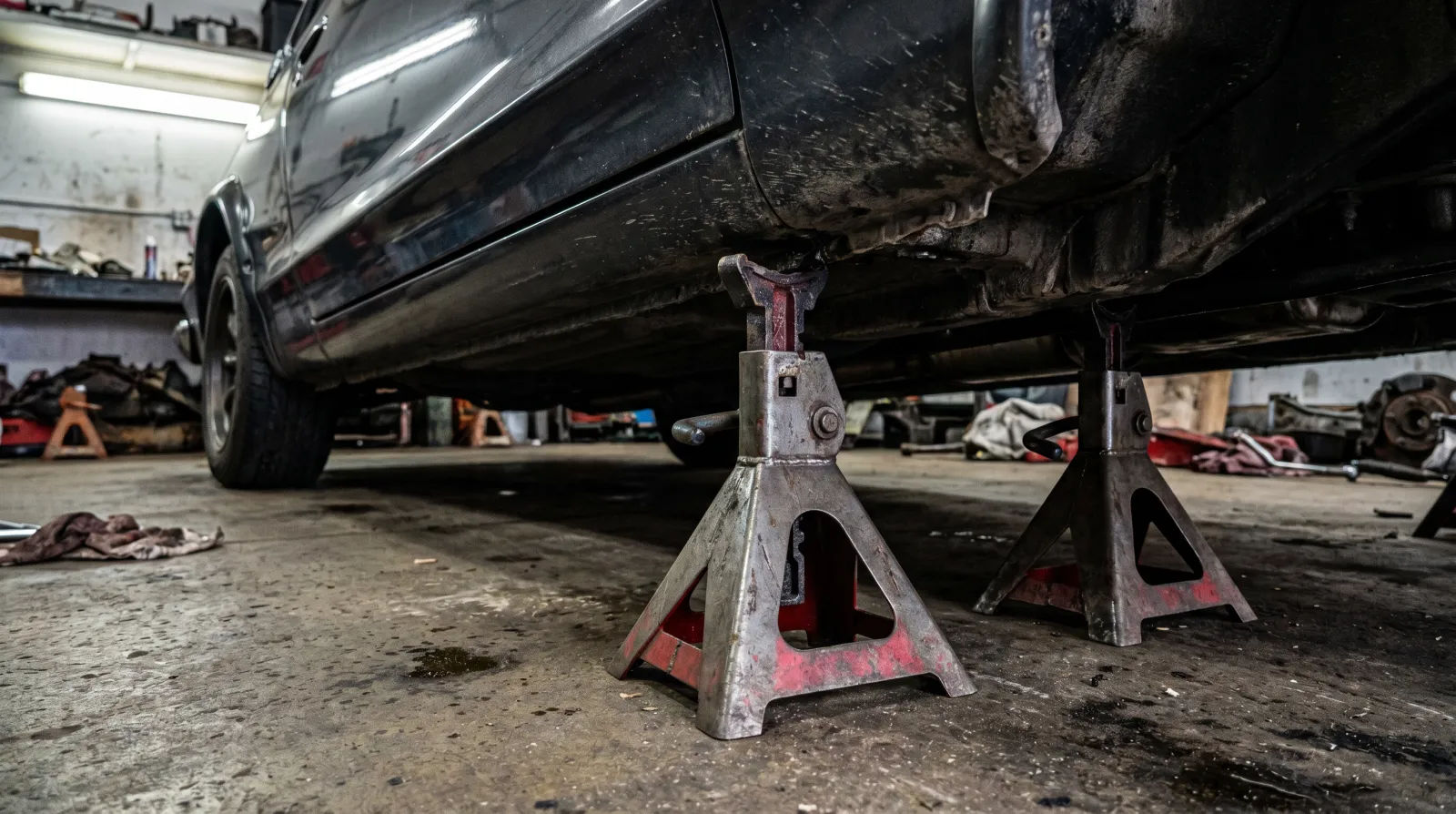
You're safely up. If you're here for an oil change, head to our oil change guide for the next steps.
How to Safely Lower a Car from Jack Stands
- Clear the work area — remove all tools, rags and drain pans, and do a visual sweep.
- Pump the jack up until it bears the weight — the load transfers off the stands and they become easy to move.
- Remove both stands and move them clear.
- Crack the release valve slowly and lower evenly to the ground — don't drop it quickly.
- Confirm all four tyres are down before removing the jack and chocks.
- Do a walk-around — caps and fasteners back, nothing hanging loose — before you drive.
Common Mistakes That Get People Hurt
Using the jack alone (seals fail without warning); the wrong jack point (crushing a sill, cracking the sump); soft or uneven ground; skipping the push test; and lifting too high. All of them and how to avoid them in common jacking mistakes, and the full case for stands is in do you really need jack stands.
Quick Reference: The Jack Safety Rules
- Level concrete only
- Parking brake on, transmission in Park or gear
- Chocks on the grounded end — always
- Jack points from your owner's manual — no exceptions
- Two jack stands minimum — four for full-car lifts
- A jack lifts. A stand holds.
- Push/wobble test before going under — every time
- Never go under a car supported only by a jack
For the full series — gear guides, jack points and FAQs — start at the jacking up a car hub.
Affiliate Disclosure
Some links on this page are affiliate links. If you buy through them we may earn a small commission at no extra cost to you. It never changes our verdicts — we only recommend gear we would run on our own cars. Read the full disclosure.