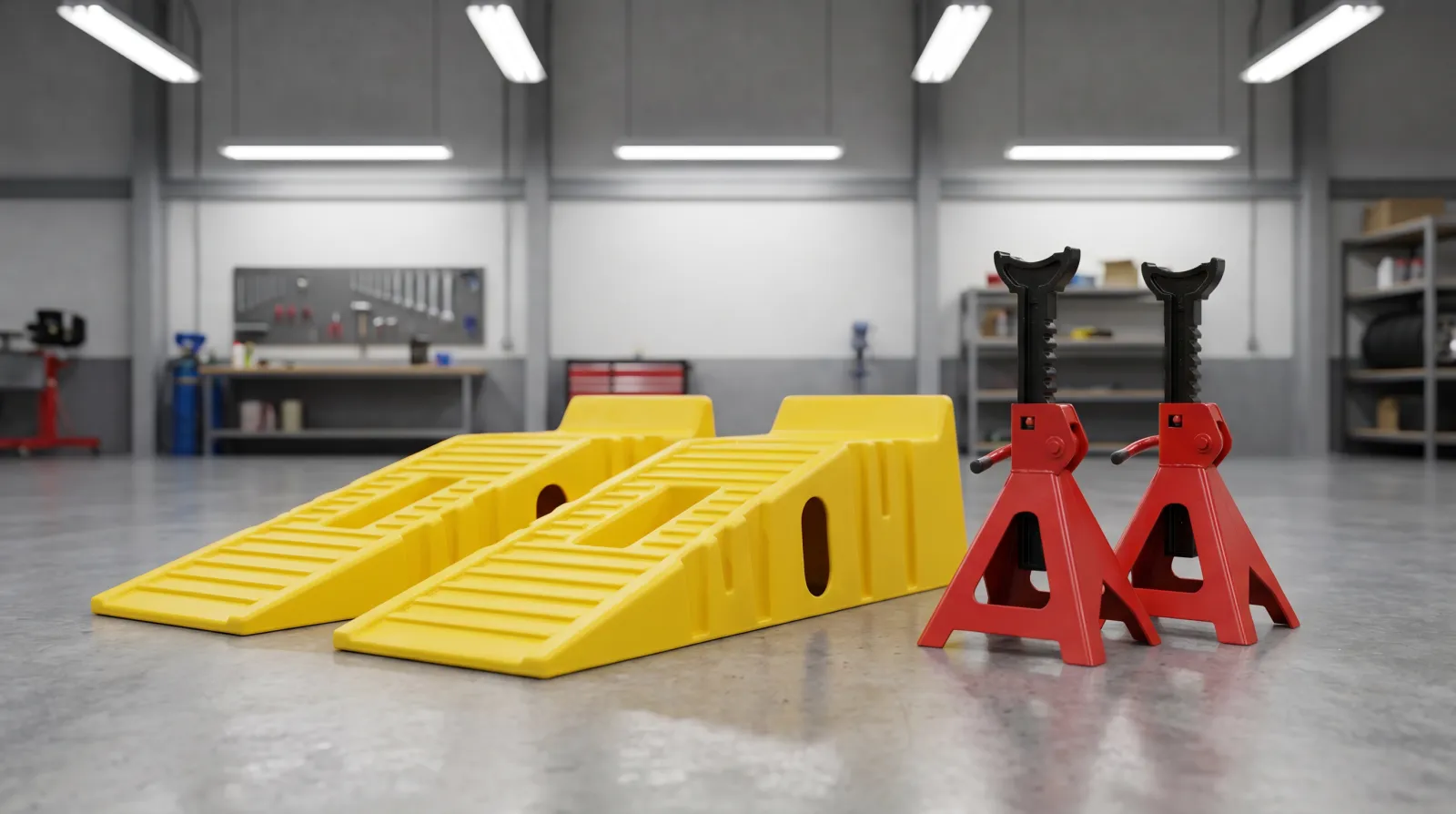
Every home mechanic reaches the point where the car needs to come up. You have two main options: drive-on vehicle ramps, or a trolley jack with axle stands. Both are legitimate, both hold your car safely when used right — the real question is which suits the job you're actually doing. This is part of our jacking up a car hub.
The Core Difference
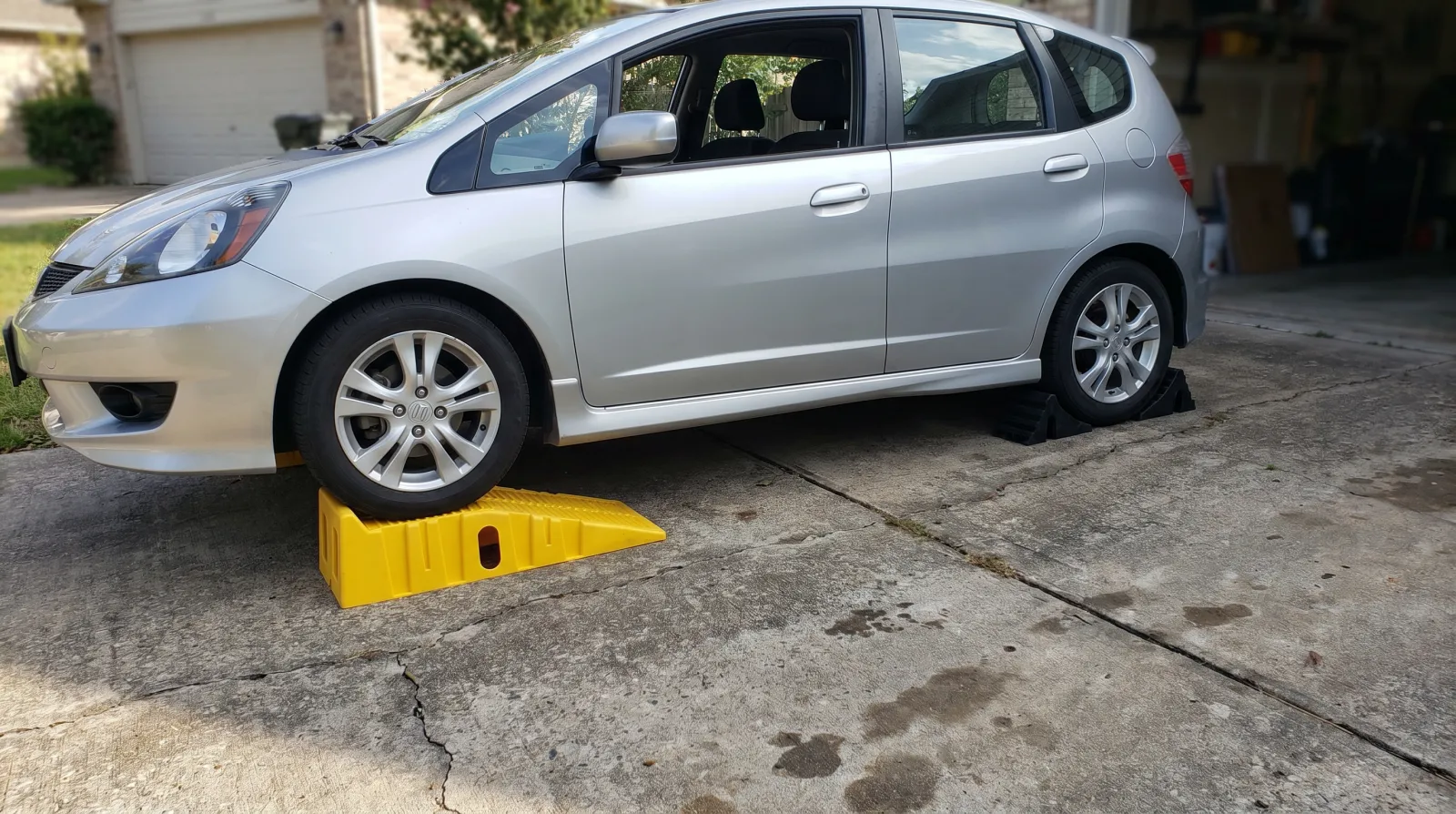
Drive-on ramps are wedge-shaped inclines you park your wheels onto — drive up, engine off, handbrake on, chock the rears, and you're under. No jack involved means no jack-slip risk during setup, their biggest safety advantage. A jack-and-stands setup uses a trolley jack to lift, then slides axle stands under a rated point before lowering. The jack does the lifting; the stands do the holding, and the jack comes off load once the car rests on them. Jack lifts, stands hold — tattoo that into your workflow.
Ramps: Where They Win
Ramps are hard to beat for the straightforward oil change on a standard-ride-height car: drive up, chock the rears, crawl under, three minutes to set up. Because the car drives on under its own power, there's no moment balanced on a jack — removing that step removes a real source of error for beginners. They're also cheaper at entry level.
Ramps: Their Real Limitations
Approach angle and ground clearance — standard ramps have a 15–20° slope; a lowered car's lip will scrape or bottom out before the wheels reach the top (low-profile approach wedges help, but a genuinely slammed car may not clear). Fixed lift height — ramps raise the car a set 150–250 mm you can't adjust, so exhaust or suspension jobs that need more clearance are out. No wheel access — the car rests on its wheels, so no brake, bearing or caliper work.
Jack Stands: Where They Win
Axle stands are far more versatile — you lift to a height of your choosing and position stands at rated chassis points, so you get as much clearance as your jack allows. For a lowered car, a good low-minimum-height trolley jack often gets under vehicles that choke on ramp approach angles. And stands allow wheel removal — every brake job, rotation, bearing and spacer fitment becomes possible. If you own one setup that handles the full range of home jobs, it's jack and stands.
Jack Stands: What Can Go Wrong
The added steps are where errors happen: using the wrong jack point and deforming a sill; placing stands on soft or uneven ground; working under a car still partly on the jack; or using stands rated below the axle load. None are the tool's fault — they're procedural. Follow the correct points (see where are the jack points), use firm level ground, and confirm the car is fully settled before you go under.
Ramps vs Jack Stands: Head-to-Head
| Factor | Drive-On Ramps | Jack + Axle Stands |
|---|---|---|
| Setup speed | Fast — drive up and done | Slower — multiple steps |
| Jack-slip risk at setup | None (no jack used) | Present if procedure skipped |
| Works on lowered cars | Often no (approach angle) | Yes, with a low-profile jack |
| Adjustable lift height | No (fixed) | Yes (to jack max) |
| Wheel removal | No | Yes |
| Brake & suspension work | No | Yes |
| Oil change suitability | Excellent (standard height) | Good |
| Entry-level cost | Lower | Higher (jack + stands) |
| Versatility | Limited to undercar access | Broad — most home jobs |
The Wheel Chock Rule Applies to Both
Neither ramps nor stands replace wheel chocks. On ramps, chock the grounded rear wheels so the car can't roll backward off them — the handbrake alone is not a substitute (cables stretch, mechanisms fail). On stands, chock the grounded wheels to stop any roll that could shift the car off a stand. Ten seconds, no cost — never skip it. Detail in wheel chocks & safety.
Which Should You Buy First?
If you only do oil changes on a standard-height daily, ramps are a legitimate first buy. If you ever plan to do brake work, rotate your own tyres, do suspension/exhaust, run a lowered car, or want a setup that grows with your skills — start with jack and stands. In practice most active home mechanics end up owning both: ramps for quick services, jack and stands for anything needing wheels off or more height. For the full gear list before your next oil change, see oil change tools.
The Short Version
Pure oil change on a normal-clearance car? Ramps are faster with fewer steps. Anything needing the wheel off, more lift height, or a low-sitting car? You need a jack and stands. Neither works without wheel chocks, and check weight ratings before buying either. Start with the jacking up a car hub for the full workflow.
Affiliate Disclosure
Some links on this page are affiliate links. If you buy through them we may earn a small commission at no extra cost to you. It never changes our verdicts — we only recommend gear we would run on our own cars. Read the full disclosure.