Affiliate Disclosure
Some links on this page are affiliate links. As an Amazon Associate, we earn from qualifying purchases — at no extra cost to you. We do not buy, test, or physically handle the products we cover; our rankings come from aggregated owner reviews, ratings and expert consensus. Commissions never change our verdicts. How we rank & full disclosure.
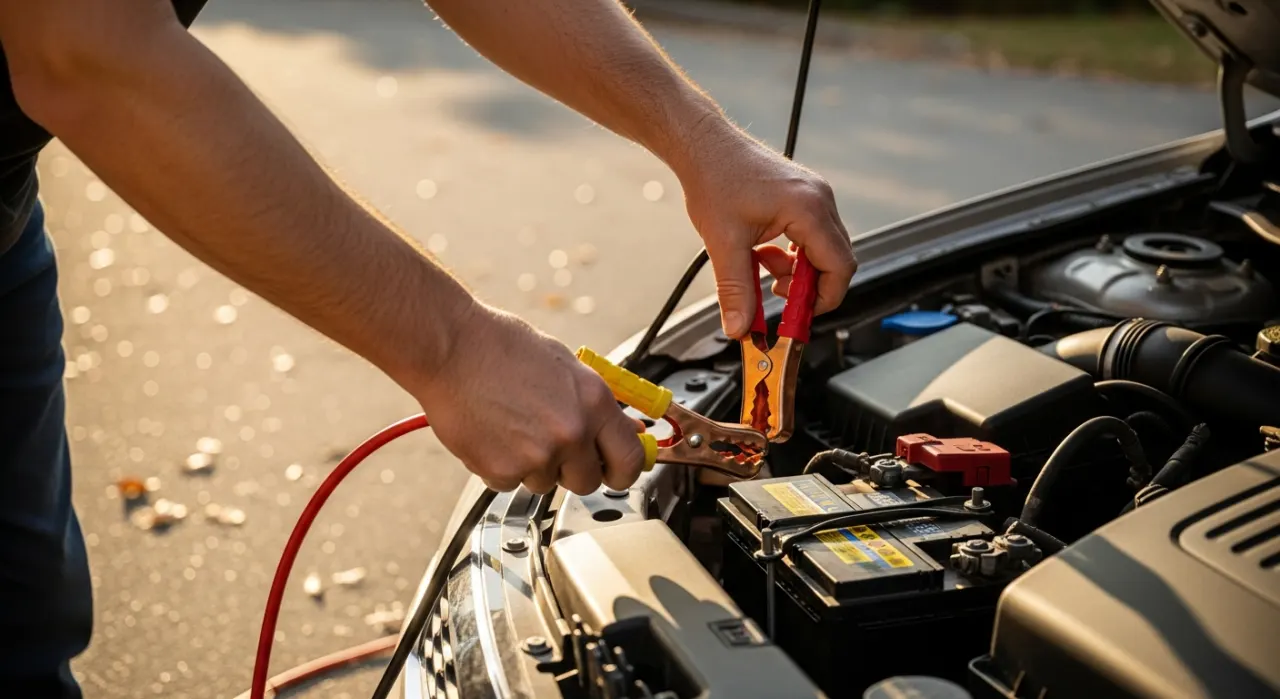
Short version: for most drivers, a portable jump starter is the better tool — it cranks your engine on its own, no second car and no stranger required, and quality packs add safety protection cables simply don't have. Jumper cables are cheaper and never need charging, so they make a great low-cost backup, but on their own they leave you dependent on finding another vehicle and driver. If you buy one, buy the jump starter; if you want belt-and-suspenders, carry both. Here's the honest head-to-head.
This is one of the most common questions in battery care, and the answer has shifted as lithium jump starters got cheap and compact. If you're leaning toward a pack, the ranked options are in best portable jump starter.
Independence: The Deciding Factor
This is the heart of it. A dead battery rarely happens somewhere convenient — it's a dark parking lot at closing time, a trailhead with no one around, your own driveway at 6am when you're already late. With jumper cables, none of that matters unless a second running car and a willing driver happen to be there. With a portable jump starter, you clamp it to your own battery, press a button, and start the car — alone, in the rain, in the middle of nowhere. Owners consistently name this independence as the single reason they switched, and it's why the jump starter wins for most people.
Cost
Cables win the sticker price. A decent heavy-gauge set runs $20–$40, while a quality lithium jump starter is typically $70–$180 depending on the cranking power you need. But price the tools against the problem they solve: a single dead-battery tow can cost more than the jump starter itself, and that's before the ruined afternoon. For a tool whose whole value is rescuing you at the worst moment, most drivers find the pack's extra cost easy to justify — and cheap cables can still ride along as backup.
Safety
Here the gap is real. Jumper cables have no built-in protection — reverse the polarity or spark near the battery and you can blow fuses or damage electronics, so the safety depends entirely on you nailing the clamp order every time. A quality jump starter includes reverse-polarity, spark and short-circuit protection, so a wrong connection beeps a warning instead of causing damage. On modern cars packed with sensitive modules, that protection is a genuine advantage, and it's one more reason owners rate the packs so highly. Either way, knowing the correct procedure matters — see how to jump start a car safely.
Convenience and Extras
A jump starter isn't only a jump starter. Most double as a USB power bank to revive a dead phone and include a bright LED flashlight with SOS and strobe modes — exactly what you want in a roadside emergency. Cables do one thing. On the other hand, cables have one convenience of their own: they never need charging. A jump starter only works if you've kept it topped up (top it up every few months), whereas a set of cables is always ready as long as another car is nearby. That reliability-without-maintenance is the cables' best argument, and the reason they make such a good backup.
Power and Cold Weather
Both can crank a cold engine, with caveats. Heavy cables plus a strong second vehicle deliver plenty of sustained current — if you can find that second car. A lithium jump starter temporarily loses some output when very cold, so in hard winters you keep it in the cabin and warm it before use, and size up so it has margin. Match the pack to your engine (1000A for most cars, 2000A+ for trucks and diesels) and the cold penalty is easy to plan around. For the deeper trade-offs of the lithium tech itself, see lithium vs lead-acid jump starters.
The Verdict: Which Should You Carry?
For the overwhelming majority of drivers, a portable jump starter is the tool to own — it's independent, safer, and does more than cables ever could. Buy a well-reviewed pack sized to your engine, keep it charged, and keep it in the trunk. If you want maximum coverage, toss a cheap set of jumper cables in alongside it as a no-charge-needed backup and to help others. The one combination to avoid is relying solely on cables and hoping a second car shows up when your battery dies. For the packs owners rate highest and the rest of your battery-care kit, head back to the jump starters & battery care hub.