Affiliate Disclosure
Some links on this page are affiliate links. As an Amazon Associate, we earn from qualifying purchases — at no extra cost to you. We do not buy, test, or physically handle the products we cover; our rankings come from aggregated owner reviews, ratings and expert consensus. Commissions never change our verdicts. How we rank & full disclosure.
Short version: plugging a flat is one of the most satisfying roadside repairs there is — for a nail or screw in the main tread, you pull the object, ream the hole, push in a sticky string plug, trim it, and reinflate, all with the tire still on the car. Done right, it's a reliable fix that often lasts the life of the tire. The one thing that matters as much as the technique is knowing the limits: a plug is only for tread punctures, never for a sidewall, a gash, or a tire that's been driven flat.
A plug kit and a portable inflator together turn the classic nail-in-the-tire into a ten-minute problem instead of a tow-truck afternoon — which matters more than ever now that so many new cars ship without a spare. Here's exactly how to do it, and exactly when not to.
First: Is This Tire Even Plug-able?
Before anything else, figure out whether a plug is appropriate — this is the part people skip and it's the most important. A plug is safe only for a puncture in the main tread, the flat central band of the tire that contacts the road. If the damage is any of the following, stop and get the tire professionally inspected or replaced:
- Sidewall puncture — the flexible outer wall. It moves too much to hold a plug and is structurally critical.
- Shoulder puncture — near the edge where tread meets sidewall. Same problem as the sidewall.
- A cut, slash or hole bigger than about 1/4 inch — too large for a plug to seal reliably.
- A tire that was driven on while flat — it may be overheated and internally damaged even if it looks okay.
If the puncture is a nail or screw sitting in the tread, you're good to plug. If you're unsure, treat it as not plug-able and get it looked at — a tire is not the place to gamble.
What You'll Need
A basic string-plug kit contains everything: a reamer (the rasp tool that cleans and roughens the hole), an insertion tool (the eyelet needle that carries the plug), string plugs, vulcanizing cement, and usually pliers and a blade. You'll also want a portable inflator to refill the tire and a pressure gauge to set it right. If you don't own a kit yet, our best tire repair kit ranking covers the standouts.
Step-by-Step: Plugging the Tire
- Park safely. Get off the traffic lane, set the parking brake, and put on hazards. You can do this with the tire on the car — no jack needed — as long as the puncture is reachable. Roll the car forward if the nail is at the bottom.
- Find and mark the puncture. Locate the nail or screw. If it's not obvious, listen and feel for escaping air, or spray soapy water and watch for bubbles.
- Remove the object. Grip the nail or screw with pliers and pull it straight out. Note the angle it went in — you'll ream and plug along that same line.
- Ream the hole. Push the reamer tool into the puncture and work it in and out several times. This cleans and roughens the hole so the plug and cement bond — it takes more force than you'd expect, and that's normal. Leave the reamer in until the plug is ready to keep the hole open.
- Prep the plug. Thread a string plug halfway through the eye of the insertion tool so equal lengths hang each side. Coat it with the vulcanizing cement if your kit includes it.
- Insert the plug. Pull the reamer out and, without delay, push the insertion tool with the plug straight into the hole until about a half-inch of plug is left showing. Then pull the tool straight back out — it's designed to leave the plug behind, folded into the hole.
- Trim it. Cut the excess plug flush with the tread using the blade or a knife, leaving a small stub. Don't cut it below the surface.
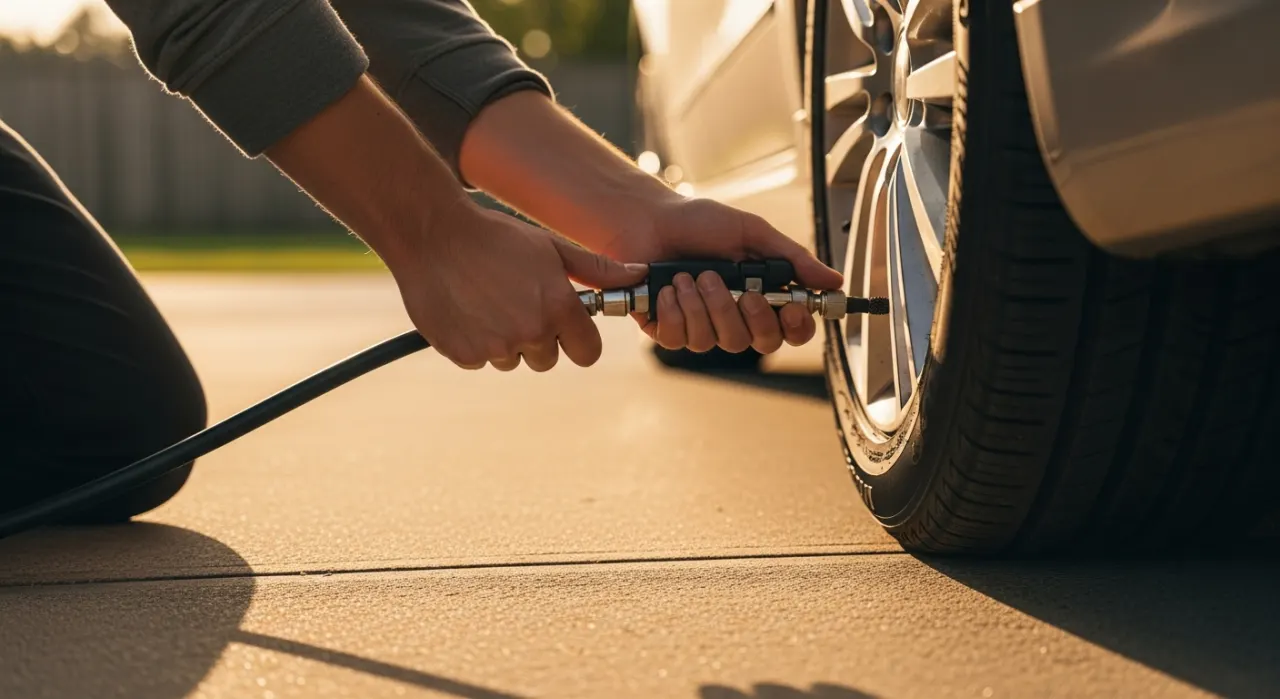
- Reinflate. Use your inflator to bring the tire back to the door-jamb pressure, and confirm with a gauge. The full inflation routine is in how to use a portable tire inflator.
- Check the seal. Spray soapy water over the plug — no bubbles means a good seal. Drive gently at first and re-check the pressure after a few miles to be sure it's holding.
Is a Plug a Permanent Fix?
Honestly, it depends who you ask. In practice, a well-installed plug in a tread puncture frequently lasts the rest of the tire's life, and owners report exactly that across thousands of reviews. Tire and safety authorities, though, define the proper permanent repair as a combination patch-plug installed from inside the tire by a shop — which also lets them inspect the interior for hidden damage the outside can't reveal. The sensible middle ground: trust your roadside plug to get you home safely and keep you rolling, and consider having it inspected or converted to an internal patch-plug when convenient, especially if it's a tire you'll keep for a while.
After the Repair
Once you're home, keep an eye on that tire's pressure for the next week or two — a slow drop means the plug isn't fully sealing and the tire needs attention. As long as it holds steady at the correct pressure and the puncture was in the tread, you can drive on it normally. And restock your kit: replace the plug and cement you used so it's ready for next time. For the tools that make all of this easy, and the rest of the tire-care picture, head back to the tire inflators & tire tools hub.